
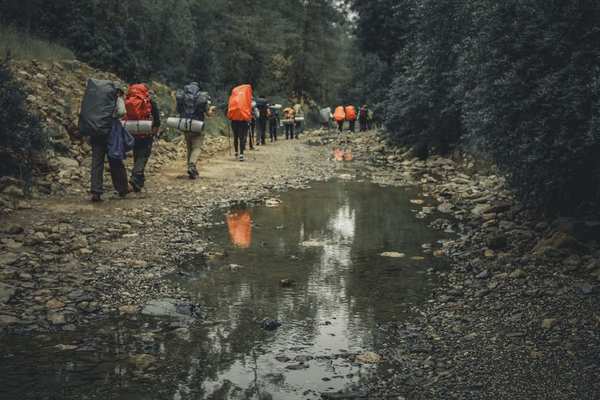
Moving from day hikes to an overnight trek changes the whole nature of a trip. Mileage still matters, but so do campsite spacing, food weight, water access, permits, weather windows, and transportation. The best multi-day hiking trails in the USA are the ones that match your time, fitness, elevation tolerance, and planning ability.
For hikers comparing multi day hikes, it helps to look beyond scenery. A short loop with steep passes can demand more than a longer route with gentler grades, while a famous long-distance trail may require months of permit and resupply planning.
How the Routes Compare
Wonderland Trail, Washington
Mount Rainier’s Wonderland Trail makes an approximately 93-mile circuit around the mountain. It is demanding because the trail repeatedly loses and regains elevation rather than climbing once and staying high. The National Park Service allows food and fuel caches at designated locations, which can reduce pack weight on a longer itinerary.
Overnight backcountry stays require a wilderness permit, and complete-circuit itineraries are highly competitive. Conditions can change quickly, too. In 2026, wildfire-related closures affected sections of the trail, so hikers should check current NPS alerts immediately before travel. Wonderland suits hikers who want a true circuit and are comfortable planning daily mileage around repeated climbing.
Teton Crest Trail, Wyoming
The Teton Crest Trail is a 39-mile point-to-point route when started at Phillips Pass and finished at String Lake, according to Grand Teton National Park. It gains more than 9,000 feet, so four moderate-mileage days can still feel strenuous. Some hikers shorten the approach by using the aerial tram from Teton Village.
Backcountry permits are required for overnight camping inside the park, and popular camping zones often fill during the core summer season. This is one of the strongest trekking routes USA hikers can choose when they want dramatic alpine scenery without committing to a multi-week trip. Point-to-point transportation and lingering snow are important planning factors.
John Muir Trail, California
The John Muir Trail is the major step up in scale. The National Park Service describes it as roughly 211 miles from Yosemite Valley to Mount Whitney, with much of the route crossing high Sierra terrain. A full hike commonly requires multiple weeks, making resupply part of the itinerary rather than an optional convenience.
Permit rules depend on where you begin. Hikers starting a continuous southbound trip in Yosemite need a qualifying Yosemite wilderness permit, and access beyond Donohue Pass is especially competitive. Snowpack, stream crossings, wildfire smoke, and high-elevation weather can all affect the schedule. For hikers interested in long distance hiking, the JMT is an expedition rather than a short getaway.
Four Pass Loop, Colorado
The Four Pass Loop in the Maroon Bells-Snowmass Wilderness is about 28 miles and crosses four high passes, making it a strong example of why mileage alone is a poor difficulty measure. The route can fit into three or four days, yet altitude, steep climbs, afternoon thunderstorms, and early-season stream crossings can make each day consequential.
Advance permits are required for camping in designated overnight permit zones. This loop is best for hikers who want a compact but demanding high-country trip and already know how their body responds to altitude.
High Divide Loop, Olympic National Park, Washington
For a shorter first backpacking trip, Olympic National Park’s High Divide Loop provides a useful contrast. The loop is about 18.2 miles with roughly 3,050 feet of elevation gain. Snow can linger into early or mid-July, camping is limited, permits are required, and approved bear canisters are mandatory in the Sol Duc, High Divide, and Seven Lakes Basin area.
This route works well for hikers who want to practice multi-night systems without carrying a week’s food. The shorter distance makes gear, meals, and camp routines easier to test before tackling longer backpacking trails.
Choose by Logistics, Not Just Scenery
A practical comparison starts with the constraint most likely to derail the trip. If you have four days and no shuttle, a loop such as Four Pass may be easier to organize than the Teton Crest Trail. If permits are your biggest uncertainty, keep a second itinerary in the same region. If food weight is the concern, routes with realistic resupply or caching options deserve extra attention.
Imagine two hikers who can comfortably cover 10 trail miles per day. On flat terrain, a 40-mile trip sounds like four days. On the Teton Crest Trail, high passes, elevation gain, breaks, water treatment, and camp setup may turn that target into an exhausting schedule. Building the itinerary around realistic moving time rather than headline mileage creates more margin for weather and fatigue.
Before booking travel, review a backpacking gear checklist, a hiking permit planning guide, and a backcountry food and water guide. Those three planning areas often expose problems earlier than looking at a map alone.
Season and Permit Planning
Most high-elevation western routes have a short snow-free window, but timing differs by range and by year. Olympic’s High Divide is generally most practical from mid-July into September, while Grand Teton notes that popular camping zones are especially busy from late July through early September. Heavy snow can delay passage, while late summer can bring wildfire or smoke concerns.
Permit systems also change. Treat the managing agency’s current page as the authority, not an old blog post or saved screenshot. Check the National Park Service, U.S. Forest Service, or Recreation.gov details for your exact trailhead, camping zone, and dates. Recheck shortly before departure for closures, fire restrictions, road work, water issues, or bear-storage requirements.
Frequently Asked Questions
What is a good first multi-day hike in the USA?
A shorter route with established camps, manageable elevation, and straightforward exit options is usually easier for a first trip. Olympic’s High Divide Loop is one example, provided you secure the required permit, carry an approved bear canister, and are prepared for mountain conditions.
How many miles should I hike per day?
There is no universal target. Elevation gain, altitude, pack weight, trail surface, heat, and fitness can matter as much as distance. Start from mileage you have already handled comfortably on loaded training hikes, then leave extra time for camp chores and delays.
Do all U.S. backpacking trails require permits?
No. Requirements vary by land manager, trailhead, camping zone, season, and group size. Many popular national park and wilderness routes do require overnight permits, while other areas use self-registration or have fewer restrictions.
How far in advance should I plan?
For popular routes, begin researching several months ahead so you understand reservation release dates, transport, seasonal access, and backup options. Even with a reservation, keep checking current conditions as the trip approaches.
Plan the Trip You Can Actually Enjoy
The most memorable multi-day route is rarely the one with the biggest number attached to it. Wonderland rewards careful camp spacing, the Teton Crest Trail compresses serious alpine travel into a shorter distance, the John Muir Trail demands expedition-style planning, Four Pass Loop packs altitude into a compact circuit, and High Divide offers a more approachable test of backpacking systems. Compare time, elevation, permits, resupply, and transportation first; once those pieces fit, the scenery becomes the reward rather than a distraction from a rushed itinerary.