
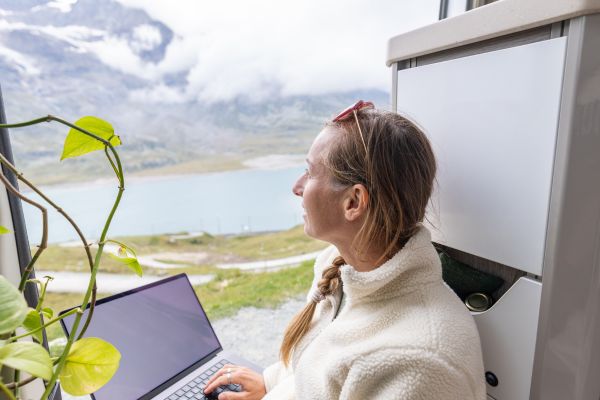
The photograph usually looks perfect: a laptop beside a coconut, a bright blue sea in the background, and perhaps a hammock waiting just beyond the edge of the frame. It suggests that working while traveling is a permanent holiday with stronger Wi-Fi.
Real digital nomad journeys are rarely that simple.
Behind the attractive images are missed buses, noisy apartments, unstable internet connections, unfamiliar grocery stores, visa deadlines, and video calls taken at very strange hours. There are also quiet mornings in new cities, friendships formed across languages, and the rare satisfaction of realizing that home no longer has to be a single place.
For many remote workers, the nomadic lifestyle is less about escaping ordinary life and more about rebuilding it under constantly changing conditions.
The First Departure Feels Bigger Than Expected
The beginning of a digital nomad journey often arrives with equal parts excitement and anxiety. Packing a life into one or two bags sounds freeing until every possession has to earn its place.
A freelance writer leaving Manchester for Lisbon may spend weeks imagining tiled streets, sunny cafés, and productive afternoons near the river. The emotional reality can be different. On the first evening, the unfamiliar apartment feels unusually quiet. The excitement of arriving fades, and practical concerns take over. Where is the nearest supermarket? Is the neighborhood safe after dark? Will the apartment internet support tomorrow morning’s client meeting?
These small uncertainties can make the first few days surprisingly exhausting.
Still, there is a memorable shift that happens when the laptop opens and the workday begins. The worker is no longer simply visiting. Daily life has started. Deadlines continue, emails arrive, and the new city gradually becomes more than a destination on a map.
Work Does Not Disappear Because the View Is Beautiful
One of the earliest lessons from digital nomad journeys is that scenery does not automatically create productivity.
A programmer may rent a room on a Thai island, expecting peaceful working days beside the beach. Then the tropical heat becomes distracting, construction starts next door, and the café that looked perfect online turns out to have slow Wi-Fi and loud music.
Remote work still requires structure. In fact, constant movement often demands more discipline than working from a familiar home office.
Successful nomads tend to build routines quickly. They learn which hours are best for focused work, where reliable internet can be found, and how much time they realistically have for exploration. Some work early in the morning and spend afternoons outside. Others follow the time zone of clients thousands of miles away, sleeping late and beginning work after sunset.
The freedom is real, but it is not freedom from responsibility. It is the freedom to decide where and how those responsibilities are handled.
Ordinary Moments Become the Most Memorable
Travel is often described through landmarks, but daily details tend to define nomadic life.
A remote designer spending three months in Mexico City may remember the famous museums and historic plazas. Yet the deeper memories might come from the woman at the corner bakery who starts recognizing the usual order, the sound of the fruit seller calling from the street, or the elderly neighbor who helps explain how the building’s water heater works.
Staying longer changes the experience. Instead of rushing through a checklist, digital nomads begin developing habits. They return to the same cafés, learn public transport routes, and notice how the neighborhood changes between weekdays and weekends.
This slower form of travel can create a strange emotional combination. A person remains an outsider, but not entirely. There is enough time to feel connected, even while knowing that departure is approaching.
That temporary sense of belonging is one of the most powerful parts of digital nomad journeys.
Loneliness Can Arrive in Crowded Places
Constant travel can be socially exciting. It can also be deeply lonely.
Meeting people is usually not difficult in popular remote-work destinations. Coworking spaces, language exchanges, shared apartments, and community events bring strangers together quickly. The challenge is that these relationships are often temporary.
A group may share meals every evening for two weeks, explore nearby towns together, and speak as though they have known one another for years. Then someone leaves for another country. Another person returns home. Within days, the group disappears.
Repeated goodbyes can become emotionally tiring.
Many nomads eventually realize that social contact and genuine connection are not the same thing. Being surrounded by travelers does not always provide the comfort of long-term friendship. Maintaining relationships with family and old friends also takes effort, especially when time differences make spontaneous conversations difficult.
Some people respond by moving more slowly. Instead of changing cities every few weeks, they stay for several months. This creates space for deeper friendships and reduces the feeling of constantly beginning again.
Plans Change More Often Than the Online Stories Admit
The nomadic lifestyle rewards flexibility because even carefully organized plans can fall apart.
Flights are delayed. Apartments do not match their photographs. Bank cards stop working. Weather changes travel routes. Political events, health concerns, or new visa rules can suddenly make a destination impractical.
One remote consultant might arrive in a coastal town expecting to stay for two months, only to discover that the internet becomes unreliable whenever it rains. Another may book an affordable apartment and later learn that a nightclub operates directly below the bedroom window.
These experiences are frustrating in the moment, but they also build confidence. Problems that once felt overwhelming gradually become manageable. A nomad learns to keep backup internet, store copies of important documents, avoid overly tight travel schedules, and research neighborhoods rather than judging an accommodation by its interior photographs alone.
Resourcefulness becomes part of the lifestyle.
Money Feels Different When Every Month Has a New Setting
Digital nomad journeys are often associated with affordable destinations, but moving regularly can become expensive. Flights, short-term rentals, coworking fees, insurance, visa costs, and unexpected emergencies can quickly disrupt a budget.
The cheapest accommodation may be far from reliable transport. A low-cost flight might include luggage fees and an inconvenient overnight connection. Eating out can seem inexpensive until it becomes a daily habit.
Over time, many nomads become more deliberate about money. They begin comparing total living costs rather than focusing only on rent. They stay longer to negotiate better accommodation prices and reduce transportation expenses. They also learn the value of an emergency fund, particularly when income comes from freelance work or short-term contracts.
Financial uncertainty can follow a person anywhere. A beach does not make an unpaid invoice less stressful.
At the same time, nomadic living can reveal how little is actually needed. With fewer possessions and no permanent household to maintain, some travelers become more conscious of what they buy and why.
Personal Identity Changes Along the Way
Living across different cultures can quietly reshape a person’s view of work, comfort, and success.
Someone who once measured productivity by hours spent at a desk may begin valuing flexibility and energy instead. Another person may discover that constant movement is not as fulfilling as expected and decide to create a permanent base.
That decision is not necessarily a failure.
The romantic version of nomadic life suggests that freedom means never settling down. Real experience often teaches the opposite. Freedom may mean choosing to travel for six months and remain in one place for the rest of the year. It may mean returning home, living between two cities, or traveling only when work allows.
Digital nomad journeys do not follow a single path. The lifestyle can change as relationships, careers, health, and personal priorities evolve.
The Journey Is More Than a Change of Location
The most meaningful part of remote travel is not the ability to work beside a beach or answer emails from a mountain town. It is the way unfamiliar surroundings expose habits that were once invisible.
Without a familiar routine, a person has to decide what creates stability. Without old social circles nearby, relationships require more intention. Without a permanent home, the meaning of comfort begins to change.
Real digital nomad journeys contain freedom, but they also involve compromise. They offer adventure alongside administrative work, connection alongside loneliness, and beautiful landscapes alongside ordinary working days.
The lifestyle is not an endless vacation, nor is it simply an office moved overseas. It is a continuing experiment in how life can be arranged. For those willing to accept uncertainty, adapt their expectations, and move at a thoughtful pace, the journey can become more than travel. It can become a clearer way of understanding what truly feels like home.